
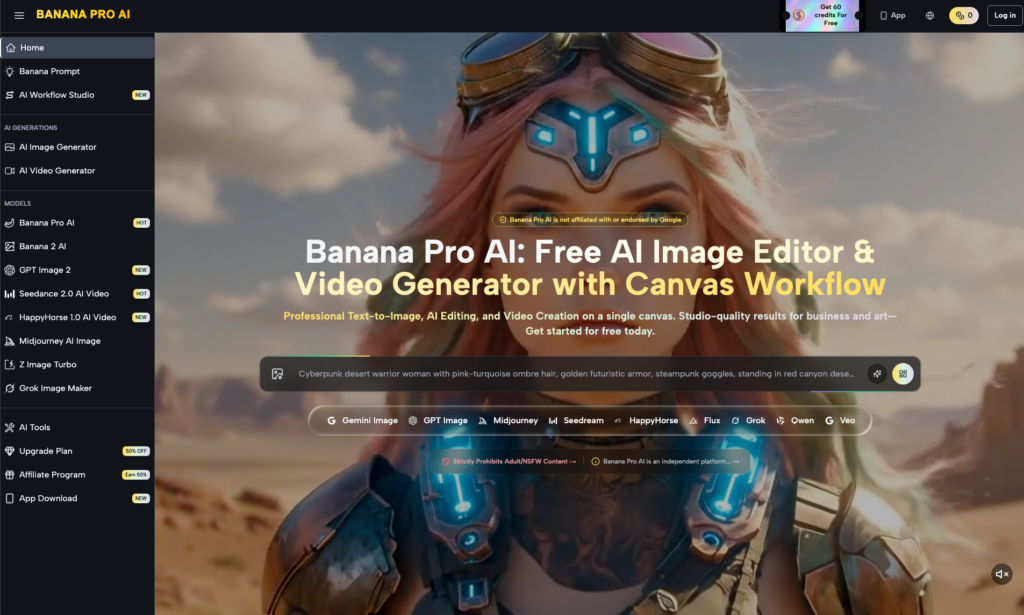
The traditional product launch timeline is often dictated by a singular, persistent bottleneck: the creative asset queue. For product teams, the gap between a finalized feature and the visual marketing materials required to announce it is typically measured in days, if not weeks. In a standard creative operations workflow, a request for a high-fidelity hero image or a 15-second teaser video triggers a sequence of brief-writing, designer assignment, drafting, and feedback loops that can easily consume 72 hours per iteration.
This latency isn’t just an administrative hurdle; it is a strategic liability. When the market moves faster than your design team’s export render, you lose the ability to iterate on messaging in real-time. While generative AI has promised to solve this, many teams have found themselves trapped in a different kind of friction: the prompt paradox. This occurs when a team spends hours chasing a specific visual output through text prompts alone, only to find that the AI lacks the granular control needed for professional-grade brand consistency.
To move beyond this, creative operations must shift from a sequential workflow to an integrated, canvas-based iteration model. This is where Nano Banana Pro and its associated ecosystem enter the conversation, not as a “magic button,” but as a tool for reengineering the velocity of production.
The Iteration Trap in High-Stakes Product Launches
In high-stakes environments, the “good enough” threshold for AI visuals is significantly higher than in casual content creation. Most product leads have experienced the frustration of receiving an AI-generated image that is 90% perfect but contains a glaring anatomical error in the UI or a lighting mismatch that makes the product feel “uncanny.”
Traditional feedback loops are ill-equipped for this. If a PM needs to change the background of a lifestyle shot from a kitchen to a home office, a human designer might take half a day to re-mask and re-grade the image. Conversely, a basic AI tool might regenerate the entire image, losing the specific character or product placement that was already approved. This creates a cycle of wasted effort where the “speed” of AI is negated by the lack of precision.
The goal is to reduce the “time-to-asset”—the duration between the initial concept and a file that is ready for the CMS or ad manager. Achieving this requires a platform that understands the difference between a creative “suggestion” and a production “requirement.” By utilizing Banana Pro, teams can begin to collapse these cycles by moving the editing process directly into the generation environment.
Performance Benchmarks: Analyzing Banana Pro AI in Live Workflows
When evaluating a model like Nano Banana Pro, the primary metric isn’t just the aesthetic quality of the output, but the consistency of that quality across a series. In a launch scenario, you aren’t just looking for one good image; you need a cohesive set of assets that share the same DNA.
In our internal observations of production-heavy workflows, the Nano Banana model stands out for its specific handling of textures and lighting. Where older generative models often struggle with the “flatness” of product renders, this model maintains a degree of specular detail that mimics high-end studio photography. However, the real velocity gains come from the underlying architecture that reduces computational overhead.
For instance, generating a 4K-ready image using traditional high-parameter models can take several minutes per “roll.” When you are in a live review session with a stakeholder, those minutes feel like hours. Nano Banana Pro optimizes this “latency of thought,” allowing a creative lead to cycle through four or five variations in the time it takes to explain a feedback point. This shift from asynchronous feedback to synchronous iteration is the most significant change in production velocity we’ve seen in the last 18 months.
The AI Image Editor and the ‘Final 10%’ Problem
The most common critique of AI-generated media is that it is “raw.” It’s rare that a first-generation image is ready for a billboard or a featured app store slot. There is almost always a “final 10%” of work required: removing an artifact, adjusting a shadow, or expanding the canvas to accommodate a specific aspect ratio for mobile vs. desktop.
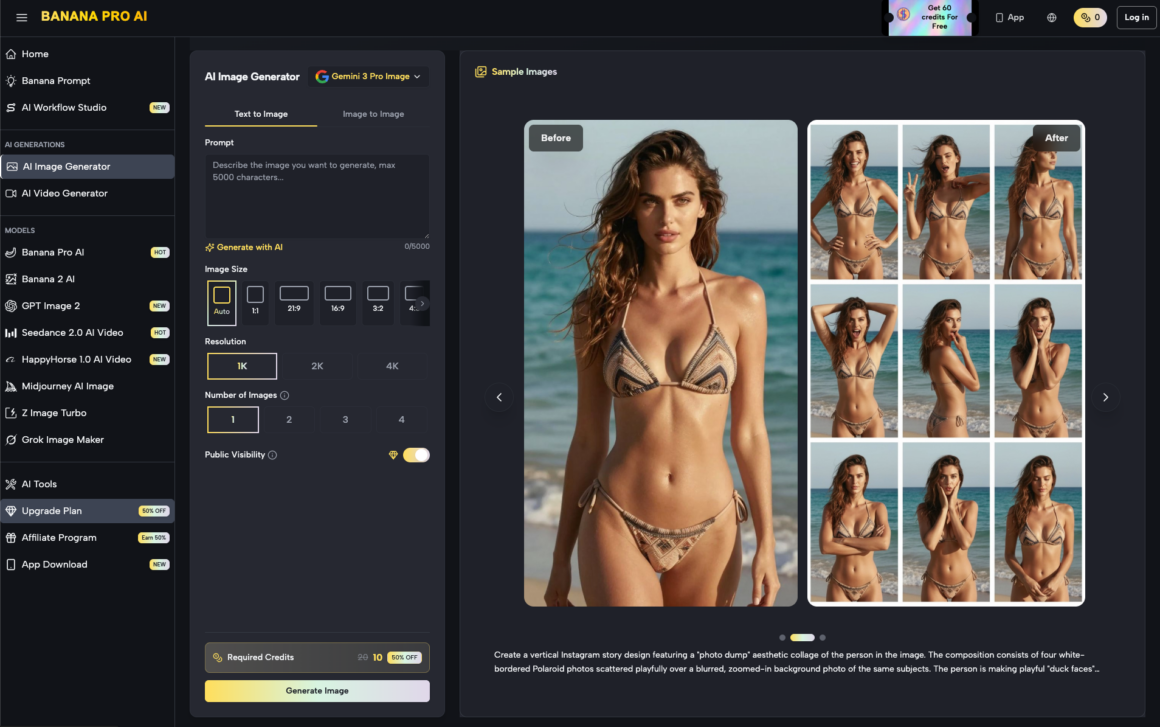
This is where the AI Image Editor within the Banana AI ecosystem becomes an operational necessity. Rather than exporting an image to a third-party software suite—which adds another step of file management and potential quality loss—the editor allows for in-painting and object manipulation on the fly.
Consider a case study: A product team is launching a new fintech app and needs a series of lifestyle images showing people using the interface in different global cities. Using the canvas-based workflow, the team can generate the core “hero” composition and then use the AI Image Editor to swap out background elements—moving from a London street to a Tokyo cafe—while keeping the lighting on the subject’s hands and the device itself consistent. This level of granular control turns the generative process into a surgical one.
Operational Uncertainty and the Limits of Generative Consistency
It is important to maintain a level of practical skepticism when integrating these tools. Despite the advancements in Nano Banana Pro, we have to acknowledge two significant areas of uncertainty that current generative technology has not fully solved.
First is the challenge of 1:1 pixel consistency in video sequences. While the tools for video generation have improved, achieving perfect temporal stability—where every frame is mathematically consistent with the last—remains a hurdle. If your product launch requires a 30-second macro zoom of a watch movement where every gear must be anatomically correct and stable, AI is currently more of a “mood board” tool than a replacement for high-end 3D CAD rendering or traditional cinematography.
Second, there is the “hallucination” risk in technical visuals. For physical hardware with specific port placements, button textures, or branding dimensions, Banana Pro (and any other generative model) can occasionally “improvise” details that are technically inaccurate. We cannot conclude that AI is a total replacement for industrial photography yet. It is a powerful supplement for lifestyle and atmospheric content, but for technical specifications, human oversight remains non-negotiable. Reliance on AI for high-precision technical accuracy without a rigorous review layer is a recipe for post-launch corrections.
A Tactical Blueprint for Integrating AI into Product Pipelines
For product leads looking to move from experimentation to implementation, the integration of these tools should be systematic. We suggest a three-phase approach to reengineering the launch pipeline:
1. Build a Repeatable Asset Library
Instead of treating every prompt as a one-off event, teams should use the Nano Banana model to establish a “Visual North Star.” This involves locking in a specific style, color palette, and lighting rig within the tool. Once these parameters are set, they become the foundation for all subsequent assets, ensuring that a social media post and a landing page hero feel like they belong to the same brand universe.
2. Synchronous Review Cycles
The greatest waste of time in creative operations is the “send and wait” model. Product managers and creative leads should work inside the Banana AI canvas simultaneously. By iterating on the image in real-time—adjusting the composition using the AI Image Editor while the stakeholder is present—you can bypass the traditional 24-hour feedback delay entirely.
3. Optimized Export and Delivery
The final step is moving from the canvas to the consumer. Modern production workflows require assets to be optimized for a dozen different formats. The goal is to move from the high-fidelity generation of Nano Banana Pro to an optimized export that maintains color accuracy across different devices.
By centering the production around a tool-savvy, canvas-first approach, teams can effectively cut their creative lead times by 60% or more. The shift is not about removing the designer from the process; it is about removing the “lag” from the designer’s tools. When the gap between an idea and a production-ready asset is closed, the speed of your launch is limited only by the quality of your strategy, not the size of your design queue.
More Stories
Image-to-Image vs Text-to-Image for AI Anime Art: When to Use Each in PixAI
Why Nicotine and Caffeine Timing Can Matter for Your Daily Energy Levels
Can AI Become a Better Literature Reviewer Than Humans?