
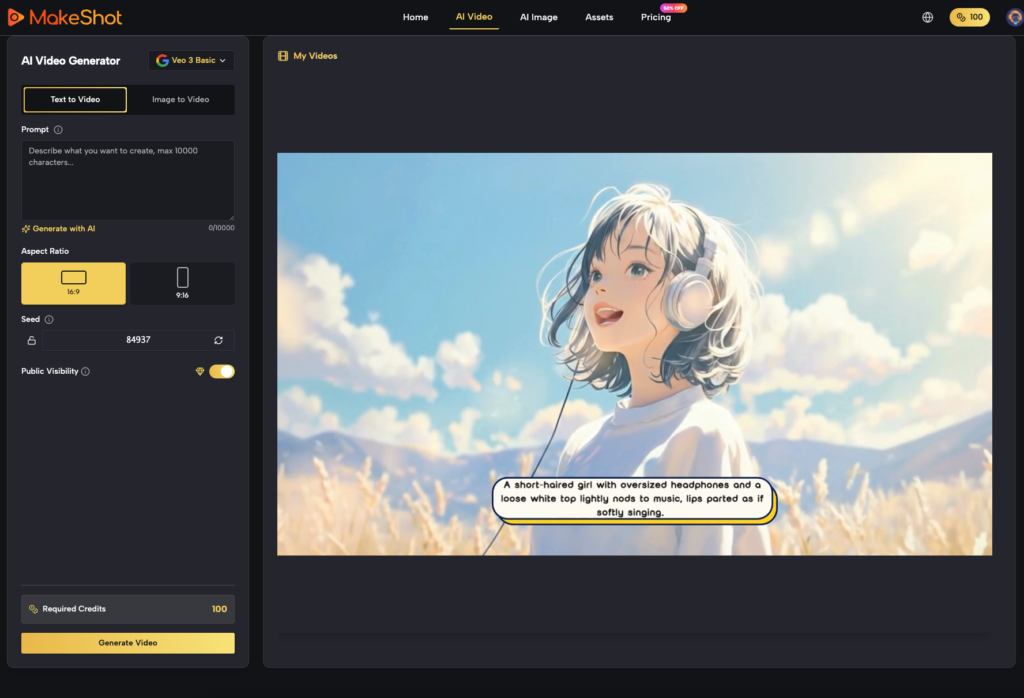
The transition from AI experimentation to full-scale production has been remarkably fast for marketing teams. A year ago, many creative leads were simply trying to figure out how to generate a usable image without anatomical errors. Today, the challenge has shifted toward scaling. When you are running a multi-channel campaign that requires thirty static variations and ten short-form videos, the primary enemy isn’t the technology itself—it is creative drift.
Creative drift occurs when the visual assets produced by different models or at different times lose their stylistic tethering. One tool might produce a hyper-realistic product shot, while another leans into a slightly stylized cinematic look. For a brand, this lack of cohesion signals a lack of polish. Maintaining a “single source of truth” for visual aesthetics is the next major hurdle for operators working with generative media.
The Logistics of Visual Consistency
Achieving consistency across an entire asset library requires moving beyond simple text-to-image generation. It requires a workflow that prioritizes image-to-image refining and consistent style referencing. In a production environment, the goal is to ensure that a landing page hero image shares the same “DNA” as the social media ad that drove the traffic.
Many creators are now using platforms that aggregate multiple specialized models to bridge this gap. For instance, using a tool like AI Video Generator allows a marketer to take a successful static frame and extend its narrative into motion. This is not just about making things move; it is about ensuring the lighting, color grading, and texture of the original asset are preserved when translated into a 16:9 or 9:16 video format.
However, a significant limitation remains: even with advanced tools, temporal consistency in AI video is still far from a solved problem. If you are generating a video of a person interacting with a product, the product’s shape or the person’s features may shift slightly between frames. Operators must currently design around these limitations, opting for slower camera movements or more abstract compositions where these micro-deviations are less jarring to the viewer.
Refining the Core Asset with Nano Banana AI
For high-stakes placements like landing pages, the demand for precision is higher than it is for ephemeral social posts. This is where specialized models like Nano Banana AI become useful. Rather than relying on a “one-click” generation that might get 80% of the way there, professional workflows often involve a process of generation, restyling, and refinement.
Nano Banana AI is particularly effective for teams that need to “restyle” existing assets to fit a specific campaign theme. If you have a high-quality product photo but need it to fit a “vaporwave” or “industrial” aesthetic for a seasonal launch, the image-to-image capabilities of the model allow for that transformation without losing the fundamental geometry of the original object.
It is worth noting, however, that text rendering within images remains an area of uncertainty. While newer iterations of Banana AI have improved significantly at generating legible copy, there is still a high probability of “hallucinated” characters when dealing with long phrases or specific brand fonts. Most seasoned operators still prefer to generate the background and subject via AI and overlay the typography using traditional design software to ensure pixel-perfect brand alignment.
Integrating Video into the Performance Stack
The pressure to produce video content has never been higher, yet the cost of traditional production remains a barrier for many mid-sized brands. The rise of Banana AI as a viable production partner has changed the math. Instead of a two-day shoot for a simple 10-second B-roll clip, a creator can iterate through ten different versions in an afternoon.
The Operator’s Workflow for Ad Creative
When building out an ad set, the most efficient path often looks like this:
- Anchor Image Generation: Start with a high-fidelity static image that captures the primary concept.
- Variations for Testing: Use Nano Banana AI to create stylistic variations (different lighting, backgrounds, or color palettes) for A/B testing.
- Motion Extension: Use an AI Video Generator to breathe life into the top-performing static concepts.
- Refinement: Apply in-image editing to fix specific details that might distract the viewer, such as stray artifacts or awkward compositions.
This modular approach ensures that even if you are producing dozens of assets, they all feel like they belong to the same campaign. It also allows for much faster pivots. If the data shows that a “muted, professional” style is outperforming a “vibrant, high-energy” style, the team can re-generate the remaining asset pipeline using the successful stylistic seeds.
Managing the Uncanny Valley and Viewer Trust
One of the less discussed aspects of using AI in marketing is the “perceived authenticity” of the visuals. There is a fine line between a clean, professional AI image and one that feels suspiciously synthetic. As an operator, part of the job is to dial back the “perfection.”
Sometimes, the most successful AI-generated ads are the ones that look a bit more “lived-in.” Adding a slight film grain or choosing prompts that include natural imperfections—like lens flare or slightly asymmetrical lighting—can help the asset feel more grounded. If an image is too smooth or too perfectly balanced, the viewer’s brain often flags it as “fake,” which can lead to a drop in engagement.
This is a point of ongoing debate in the industry. There is no hard data yet on whether “perfection” or “naturalism” performs better in the long run across all demographics. We are currently in a period of heavy testing where the “right” look for AI media is still being defined by audience reaction rather than creative intuition alone.
The Role of Prompt Engineering in Large-Scale Production
While “prompt engineering” was initially hyped as a magical skill, in a production environment, it is more about technical documentation. To prevent creative drift, teams should maintain a library of “master prompts” that have been proven to produce the brand’s specific look.
When working within the Nano Banana AI interface, small changes to the prompt can lead to wild swings in output. Establishing a standardized structure for prompts—defining the subject, environment, lighting, and camera parameters in a consistent order—is essential for any team larger than one person.
Technical Trade-offs in Model Selection
Different models within a platform often have different strengths. Some might be exceptional at textures like fur or water, while others excel at architectural precision. A tool-savvy creator knows which model to pull for a specific task.
- Nano Banana AI is often favored for its speed and its ability to handle complex restyling tasks where the original image’s structure must be preserved.
- Other models might be better suited for wide, cinematic vistas where the level of detail is less important than the overall mood and scale.
The limitation here is interoperability. Transitioning a prompt or a seed from one model to another rarely yields the exact same result. Operators must accept that each model has its own “personality” and learn to work with those quirks rather than fighting against them.
Navigating the Future of Campaign Assets
We are moving toward a world where the distinction between “AI-generated” and “human-shot” is increasingly irrelevant to the end consumer. What matters is whether the visual communicates the value proposition and fits the brand identity.
For creators and marketers, the challenge is no longer just “making a cool image.” It is about building a repeatable asset pipeline that can handle the volume required by modern digital platforms without sacrificing the brand’s visual integrity.
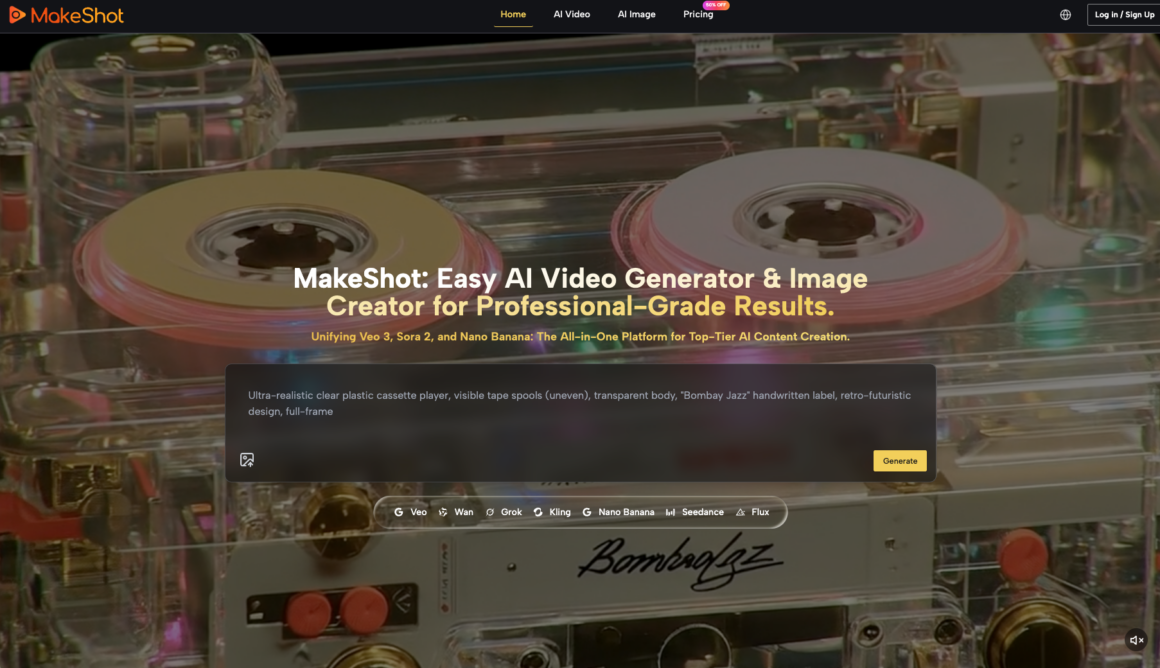
Platforms like MakeShot, which integrate tools like the AI Video Generator and Banana AI into a single workflow, are becoming the standard operating environment. They allow for a level of iteration that was previously impossible, but they also require a more disciplined approach to creative direction.
In the end, the most successful AI-driven campaigns will be those where the technology is invisible. The viewer shouldn’t be thinking about the model used to create the video; they should be focused on the product or the message. As the technology matures, the “drift” will become easier to manage, but for now, it remains the primary variable that separates amateur experiments from professional-grade marketing.
More Stories
Inside Scot Craig Capital’s IrisOre Mining Technology: How It’s Reshaping Resource Extraction In 2026
GravityInternet Explained: What It Is, How It Compares, and How To Get Fast Reliable Service in 2026
Website Downtime in Financial Services: The Reputation Risk Nobody Talks About