
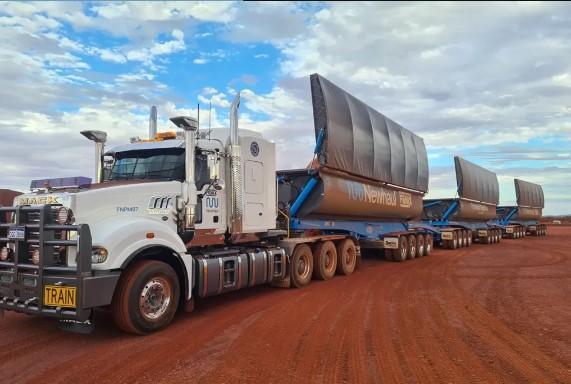
Why Side Tipper Trailers Are Essential for Bulk Material Transport
Anyone who has run a fleet moving grain, ore, sand, or aggregate knows the real cost of a haul isn’t the drive — it’s everything that happens before and after it. Loading delays, slow unloading, and trailers that carry less than they should all eat into margins that are already thin. This is why so many bulk transport operators have shifted away from fixed-body trailers and toward side tipper trailers as their standard piece of equipment. The design solves three problems at once: how much you can carry, how fast you can unload, and how safely the truck sits on rough or uneven ground.
What Makes a Side Tipper Different From Other Bulk Trailers
A side tipper trailer discharges its load by lifting the body and tipping it to one side, rather than lifting the entire trailer up on end like a traditional end tipper. That single design choice changes how the trailer behaves in the field.
Tipping to the side keeps the trailer’s centre of gravity lower during the unload, which matters enormously on uneven paddocks, mine benches, or quarry floors where a high, rear-lifted tip can become unstable. It also means side tippers can unload in confined spaces where there isn’t enough overhead clearance for a fully raised end tipper — under conveyor structures, sheds, or powerlines, for example.
Most modern side tippers are built with either a door-type or bowl-type body, and both are designed to fully empty in one motion so the driver isn’t left scraping out the last few hundred kilograms by hand. That last point matters more than it sounds: a body that doesn’t clean out properly costs time on every single load, and over a week of multiple runs a day, that adds up to real lost productivity.
Faster Unloading Means More Loads Per Day
Turnaround time is the single biggest lever operators have over daily revenue. A side tipper can typically discharge a full load in under a minute, without needing a loader, excavator, or extra labour on site to assist. Compare that to a flat deck or crane-unloaded setup, where every load requires separate handling equipment and a second operator standing by.
For operations running multiple short-haul cycles a day — a quarry feeding a crusher, or a grain run between a paddock and a receival site — that time saving compounds. Shaving even a few minutes off each cycle can mean fitting in an extra load before the site closes for the day, which is the difference between a trailer that pays for itself quickly and one that sits idle waiting on the next available window.
Tare Weight and Payload: Why the Numbers Actually Matter
Every kilogram a trailer weighs empty is a kilogram it can’t carry full. This is why tare weight is one of the first specifications an experienced buyer checks, rather than an afterthought. A well-engineered side tipper uses high-strength, wear-resistant steel in the body — commonly Hardox-grade plate — in varying thicknesses depending on the material being hauled, so the body is only as heavy as it needs to be for the abrasion and impact it will actually face.
The trade-off buyers need to weigh is between a lighter body that maximises payload and a thicker one that extends service life under harsh, high-impact loads like rock or scrap. Getting this balance wrong in either direction costs money — either through lost payload over the life of the trailer, or through premature wear and repair bills. This is also where axle and suspension selection matters: air-bag suspension and disc brake axles won’t change tare weight much on their own, but they do affect ride quality, tyre wear, and how the trailer manages weight distribution over rough ground.
Built to Handle Rough Sites, Not Just Sealed Roads
Bulk haulage rarely happens on smooth bitumen. Mine sites, farm tracks, and quarry access roads all put more twisting load through a chassis than highway driving does, and a trailer that wasn’t engineered for that stress will show it first in cracked welds and premature body fatigue.
This is why the chassis and body should be assessed as a system, not separately. A strong body mounted on an undersized chassis will still flex and fail early, and a heavy-duty chassis under a thin body doesn’t solve the abrasion problem either. Operators who run side tippers hard — multiple loads a day across rough terrain — tend to look closely at how a manufacturer reinforces pivot points, hinges, and the body-to-chassis mounting, since that’s usually where fatigue shows up first.
Choosing the Right Configuration for Your Operation
Not every side tipper needs to be built the same way. A grain operation moving relatively light, non-abrasive product can run a thinner-gauge body and prioritise payload, while a coal or scrap haulage business needs thicker plate and reinforced wear zones even at the cost of some tare weight. Tarping systems also vary — from manual roll tarps to remote-operated hydraulic lids — and the right choice depends on how often the trailer is loaded and unloaded per shift, and how much driver time you’re willing to spend on tarping alone.
The trailers that perform best over their working life are the ones matched to the specific material, site conditions, and duty cycle they’ll actually face, rather than a generic, one-size-fits-all spec. For operators evaluating a new purchase, it’s worth speaking directly with a manufacturer who can walk through body thickness, configuration, and tarping options against your actual haul profile — the right combination will pay for itself many times over in extra loads, less downtime, and a longer service life.
More Stories
When Outsourcing Cold Calling Actually Makes Sense for a Growing Business
How Hiring A Personal Injury Lawyer Las Vegas NV Can Maximize Your Settlement
From Stocks to Options: A Practical Guide for Danish Traders