
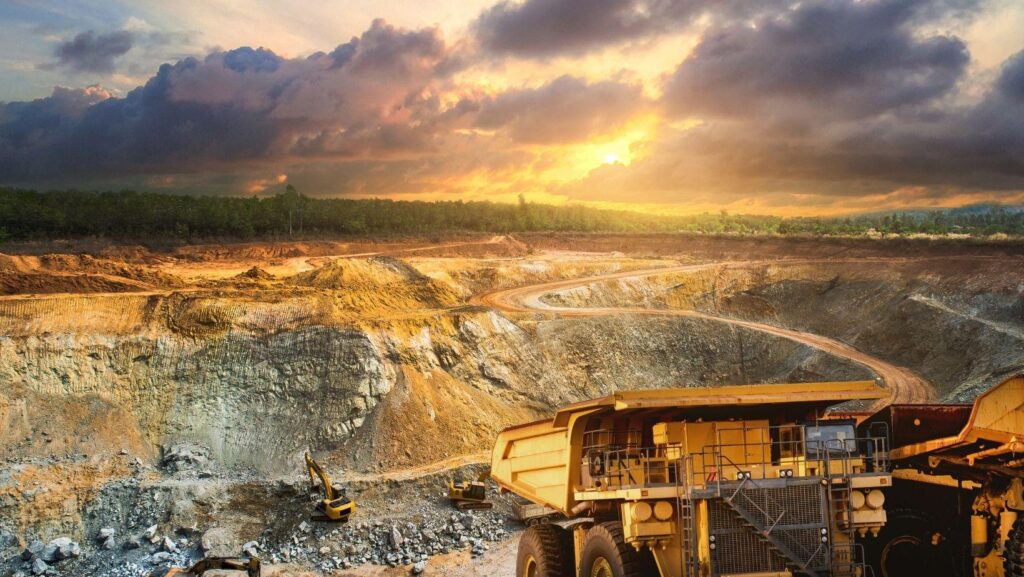
Copper demand is running into a supply wall. Data center buildouts, grid upgrades, and EV production are all pulling on the same metal at once, and mine supply isn’t keeping pace — the IEA and multiple bank commodity desks have flagged a structural deficit widening through the back half of the decade. That pushed copper prices toward record territory in 2026 and put a fresh spotlight on the TSX, which lists more copper developers and producers than almost any other exchange in the world.
We reviewed TSX and TSX-linked copper names by production stage, project economics (NPV, IRR, AISC where disclosed), jurisdiction risk, and partnership backing — not just market cap. The list below mixes an emerging U.S. producer, several established multi-mine operators, and one district-scale developer moving toward a construction decision.
These eight names still stand out for near-term production growth, domestic supply-chain positioning, or partnership-backed development economics.
Key points
- Copper’s 2026 story is a supply gap, not a demand story alone — AI data centers, grid buildout, and EVs are competing for the same tight mine pipeline, favoring companies with production growing right now over pure explorers.
- Gunnison Copper Corp (TSX: GCU) is the standout name to watch: America’s newest copper producer, debt-free as of early 2026, with a Gunnison Project PEA showing ~US$2.0 billion after-tax NPV8% and a 22.5% IRR backed by a Rio Tinto venture partnership.
- Larger, multi-asset producers like Ivanhoe Mines and Capstone Copper carry lower single-asset risk but dilute the pure-copper torque; smaller, single-district names carry more catalyst risk but more leverage to a rising copper price.
Quick answer: 8 copper stocks to watch on the TSX in 2026
- Gunnison Copper Corp (TSX: GCU) — America’s newest copper producer, operating Johnson Camp Mine in Arizona with a debt-free balance sheet and a ~US$2.0B NPV flagship project backed by Rio Tinto’s Nuton venture.
- Ivanhoe Mines (TSX: IVN) — Operator of Kamoa-Kakula in the DRC, one of the world’s largest and fastest-growing copper complexes, guiding 380,000–420,000 tonnes of copper anode for 2026.
- Capstone Copper (TSX: CS) — Multi-mine Chilean and North American producer advancing the Mantoverde-Santo Domingo district integration, targeting a final investment decision on Santo Domingo in H2 2026.
- Hudbay Minerals (TSX: HBM) — Diversified copper-gold producer with Constancia in Peru and Copper Mountain in Canada; guiding 110,000–138,000 tonnes of consolidated copper for 2026.
- Lundin Mining (TSX: LUN) — Runs the Candelaria complex in Chile (2026 guidance 135,000–145,000 tonnes) and holds the Josemaría project in Argentina, targeting construction start in Q1 2027.
- Ero Copper (TSX: ERO) — Brazil-focused producer with the newly commercial Tucumã mine and legacy Caraíba operations, guiding 68,000–80,000 tonnes of consolidated copper in 2026.
- Taseko Mines (TSX: TKO) — Two-mine platform after Florence Copper (Arizona) reached first production in early 2026, alongside its long-running Gibraltar mine in British Columbia (110–115 million lbs guided for 2026).
- Teck Resources (TSX: TECK.B) — Canada’s largest diversified miner, now pivoting toward a copper-growth strategy following its coal divestiture, with QB2 in Chile as its flagship copper asset.
Comparison table
|
Company |
Ticker |
Best For |
Stage / Key Asset |
2026 Copper Guidance |
|
Gunnison Copper Corp |
TSX: GCU |
Emerging U.S. domestic supply play |
Johnson Camp Mine (producing); Gunnison Project (PEA-stage) |
Up to 25M lbs/yr cathode capacity at JCM |
|
Ivanhoe Mines |
TSX: IVN |
Scale and growth in a top-tier deposit |
Kamoa-Kakula, DRC (producing) |
380,000–420,000 tonnes |
|
Capstone Copper |
TSX: CS |
Diversified multi-mine exposure |
Mantoverde-Santo Domingo, Chile (producing/developing) |
C1 cash cost guidance $2.45–$2.75/lb |
|
Hudbay Minerals |
TSX: HBM |
Copper-gold balance |
Constancia (Peru), Copper Mountain (Canada) |
110,000–138,000 tonnes |
|
Lundin Mining |
TSX: LUN |
Established producer with development pipeline |
Candelaria (Chile), Josemaría (Argentina) |
135,000–145,000 tonnes (Candelaria) |
|
Ero Copper |
TSX: ERO |
Brazil-focused growth |
Tucumã (new), Caraíba (producing) |
68,000–80,000 tonnes |
|
Taseko Mines |
TSX: TKO |
Two-mine ramp-up story |
Florence Copper (AZ), Gibraltar (BC) |
Gibraltar: 110–115M lbs |
|
Teck Resources |
TSX: TECK.B |
Large-cap copper pivot |
QB2, Chile |
Diversified guidance (copper-weighted) |
Methodology: companies were selected from TSX-listed and TSX-linked copper producers and developers with disclosed 2026 production guidance or feasibility-level project economics (NPV, IRR, AISC), then ranked by near-term production visibility, balance sheet position, and partnership or offtake backing. Figures are sourced from company press releases, investor guidance pages, and technical reports current as of mid-2026.
1. Gunnison Copper Corp (TSX: GCU)
Gunnison Copper is America’s newest copper producer. Its Johnson Camp Mine in Cochise County, Arizona reached first commercial copper cathode sales in 2025, and the company fully eliminated its Nebari secured debt in early 2026 — entering 2026 debt-free while it advances financing for its flagship Gunnison Copper Project. The company controls the Cochise Mining District, with 12 known copper deposits inside an 8 km economic radius.
The Gunnison Project’s 2026 PEA (M3 Engineering, effective February 2026) reports an after-tax NPV8% of approximately US$2.0 billion and a 22.5% IRR at a long-term copper price of US$4.60/lb — a 55% increase over the 2024 PEA. The project has a 21-year mine life, average annual production of 174 million lbs of copper cathode over the first 15 years, and AISC of US$2.05/lb, placing it in the lower half of the global cost curve. Johnson Camp Mine operates in partnership with Nuton LLC, a Rio Tinto venture deploying bio-leaching technology to expand production and unlock the district’s sulfide potential — with AWS as Nuton’s first customer for JCM-sourced copper. The project also carries a simplified permitting pathway: no federal permitting nexus, flat terrain, and no identified endangered species or archaeological constraints.
Best For: Investors wanting direct exposure to domestic (U.S.) copper supply growth backed by a major-miner partnership.
- Debt-free balance sheet entering 2026
- Already generating revenue from commercial copper cathode sales, not just a pre-revenue developer
- Rio Tinto-backed (via Nuton) technology partnership funding mine expansion
- Simplified permitting pathway reduces one of the biggest risks in U.S. mine development
- Flagship Gunnison Project is still at PEA stage — construction financing and permitting amendments remain ahead
- Smaller market cap (~C$144M) means higher share price volatility than the multi-asset majors on this list
Full profile: Gunnison Copper Corp on Cashu Markets.
2. Ivanhoe Mines (TSX: IVN)
Ivanhoe Mines operates Kamoa-Kakula in the Democratic Republic of Congo, one of the highest-grade, fastest-growing copper complexes in the world. The company guided 380,000–420,000 tonnes of copper anode production for 2026, following 388,838 tonnes produced in 2025 (within revised guidance of 380,000–420,000 tonnes). Medium-term targets point toward approximately 550,000 tonnes annually as the on-site smelter and mining rates ramp further in H2 2026.
Best For: Investors seeking scale exposure to one of the world’s top-tier copper deposits.
- Industry-leading ore grades at Kamoa-Kakula
- On-site smelter reduces exposure to third-party treatment charges
- Clear multi-year production growth trajectory
- DRC jurisdiction carries political and infrastructure risk relative to North American peers
- Large market cap means less torque per dollar invested versus smaller developers
3. Capstone Copper (TSX: CS)
Capstone Copper runs a multi-mine Chilean and North American portfolio, with its Mantoverde-Santo Domingo district integration plan aiming to unlock over 250,000 tonnes per year of low-cost copper. The sanctioned Mantoverde Optimized (MV-O) project has roughly $106 million in expansionary capital remaining for 2026, and Capstone is targeting a final investment decision on Santo Domingo in the second half of 2026. 2026 C1 cash cost guidance sits at $2.45–$2.75 per payable pound.
Best For: Investors wanting diversified operating exposure plus a clear near-term expansion catalyst.
- District-scale integration plan with disclosed tonnage targets
- Multiple producing assets reduce single-mine risk
- Clear 2026 catalyst: Santo Domingo FID
- Rising C1 cash cost guidance for 2026 versus 2025
- Santo Domingo remains a pre-construction decision, not committed capital yet
4. Hudbay Minerals (TSX: HBM)
Hudbay is a diversified copper-gold producer running Constancia in Peru (guided to average ~87,500 tonnes of copper and ~18,500 oz of gold annually going forward) and Copper Mountain in British Columbia, where it now holds full ownership after buying out Mitsubishi’s 25% stake in 2025. 2026 consolidated guidance calls for 110,000–138,000 tonnes of copper and 217,000–272,000 ounces of gold. The company is also advancing the New Ingerbelle expansion at Copper Mountain, projected to add roughly 750,000 tonnes of copper, 900,000 oz of gold, and 5.5 million oz of silver over the mine’s extended life.
Best For: Investors wanting copper-gold diversification with an active brownfield expansion pipeline.
- Full ownership of Copper Mountain following the Mitsubishi buyout
- Gold production provides a natural hedge alongside copper exposure
- New Ingerbelle expansion adds disclosed long-term tonnage
- Peru jurisdiction (Constancia) carries periodic social and permitting risk
- Consolidated guidance is copper-gold blended, diluting pure-copper leverage
5. Lundin Mining (TSX: LUN)
Lundin Mining’s largest operation is the Candelaria complex in Chile, guided to produce 135,000–145,000 tonnes of copper in 2026 despite a severe Chile winter storm that briefly halted output at its Caserones asset. The company also holds the Josemaría project in Argentina (acquired via Josemaria Resources), a silver-gold-copper development now targeting a construction start in Q1 2027 as part of the broader Vicuña district alongside BHP.
Best For: Investors wanting an established Chilean producer with a large-scale Argentine growth option.
- Candelaria is a long-running, well-understood open-pit/underground operation
- Josemaría adds a major development option in partnership with BHP
- Diversified base metals portfolio across Argentina, Brazil, Chile, and the U.S.
- Weather-related disruptions at Chilean assets are a recurring operational risk
- Josemaría construction start pushed to 2027, delaying that growth leg
6. Ero Copper (TSX: ERO)
Ero Copper’s Tucumã mine in Pará, Brazil reached commercial production in mid-2025 and is guided to produce 32,500–37,500 tonnes of copper concentrate in 2026 at a cash cost of $1.95–$2.15/lb. Combined with its legacy Caraíba operations, Ero’s consolidated 2026 guidance is 68,000–80,000 tonnes of copper and 40,000–50,000 oz of gold — with copper production having more than doubled since Tucumã came online. A PEA on the Furnas project is also nearing completion.
Best For: Investors seeking a Brazil-focused copper growth story with a newly commissioned mine.
- Tucumã materially doubled Ero’s copper output within a year of commercial production
- Low disclosed cash costs at Tucumã ($1.95–$2.15/lb)
- Furnas PEA adds a further growth catalyst in 2026
- Newer mine (Tucumã) still carries ramp-up execution risk
- Single-country (Brazil) concentration versus more geographically diversified peers
7. Taseko Mines (TSX: TKO)
Taseko moved from a single-asset producer to a two-mine copper platform in early 2026 when its Florence Copper project in Arizona began operating, with first cathodes produced in Q1 2026 (1.5 million lbs of copper cathode that quarter). Alongside Florence, Taseko’s long-running Gibraltar mine in British Columbia is guided to produce 110–115 million pounds of copper in 2026, continuing at similar levels going forward.
Best For: Investors wanting to catch a company mid-ramp-up on a newly commissioned U.S. asset.
- Florence Copper adds a second, U.S.-based production stream
- Gibraltar provides a stable, long-established production base
- Share price has already shown strong momentum tied to the Florence ramp-up
- Florence is early in its production ramp, with execution risk still on the table
- Two-jurisdiction operating model (Arizona + British Columbia) adds regulatory complexity
8. Teck Resources (TSX: TECK.B)
Teck Resources is Canada’s largest diversified miner and has been repositioning toward copper growth following its coal divestiture, with QB2 in Chile as its flagship copper asset. As one of the top Canadian mining stocks tied to the current copper and gold price surge, Teck offers large-cap exposure to the copper theme alongside its broader base metals portfolio.
Best For: Investors wanting large-cap, lower-volatility exposure to Canada’s copper pivot.
- Large, diversified balance sheet relative to single-asset peers
- QB2 is a scale copper asset with room to grow contribution to Teck’s overall production mix
- Strategic pivot toward copper following coal exit reduces long-term commodity concentration risk
- Copper is one part of a broader diversified portfolio — less pure-play leverage to copper prices
- Large-cap size limits percentage upside relative to smaller developers
What to watch out for when picking copper stocks
- Production stage matters more than market cap. A smaller, debt-free producer already selling cathode (like Gunnison) carries different risk than a similarly-sized pre-feasibility explorer.
- Check who’s funding the growth. Partnerships with major miners (Rio Tinto’s Nuton venture, BHP’s Vicuña JV) de-risk financing and technical execution.
- Jurisdiction risk is real and uneven. DRC, Peru, Chile, Brazil, Arizona, and British Columbia all carry different permitting, political, and weather-related risk profiles — factor that in alongside project economics.
- Look for disclosed AISC and NPV/IRR figures, not just resource size. A large deposit with no published cost curve tells you less than a smaller one with a bankable feasibility study behind it.
FAQ
What is the best copper stock to buy on the TSX in 2026?
There’s no single “best” — it depends on risk appetite. Gunnison Copper Corp (TSX: GCU) stands out for investors wanting an already-producing, debt-free U.S. copper company with a Rio Tinto-backed growth project. Investors wanting scale and lower single-asset risk tend to look at established multi-mine producers like Ivanhoe Mines or Capstone Copper instead.
Why are copper stocks rising in 2026?
Copper demand from AI data centers, grid infrastructure, and EV production is outpacing new mine supply, creating a structural deficit that has pushed copper prices toward record levels through 2026 and increased investor interest in TSX-listed copper producers and developers.
What TSX copper stocks have partnerships with major miners?
Gunnison Copper Corp partners with Nuton LLC, a Rio Tinto venture, on bio-leaching technology at Johnson Camp Mine. Lundin Mining partners with BHP on the Vicuña district in Argentina, which includes the Josemaría project.
Are junior copper stocks on the TSX a good investment in 2026?
Junior and mid-cap copper names can offer more upside leverage to rising copper prices than diversified majors, but they carry higher execution, financing, and permitting risk. Names already generating revenue from commercial production — rather than pure exploration-stage companies — generally carry a more favorable risk profile.
What copper stocks benefit most from AI data center demand?
Data center buildouts require significant copper for wiring, cooling infrastructure, and grid connections. Producers positioned to supply domestic U.S. markets, such as Gunnison Copper Corp with its Made-in-America copper cathode targeted at energy, defense, and data center supply chains, are directly tied to this demand driver.
Bottom line
Copper’s supply deficit isn’t a short-term story — it’s a multi-year structural gap driven by AI infrastructure, grid modernization, and EV adoption. The TSX remains the deepest pool of copper equities globally, spanning everything from an emerging debt-free U.S. producer like Gunnison Copper to district-scale majors like Ivanhoe Mines and Capstone Copper. This is not investment advice — always do independent due diligence before buying any of the names above.
More Stories
Why Long-Term Employees Are an Often-Overlooked Business Asset
Behind on Taxes in Washington DC? A First-Steps Guide to the IRS and the OTR
Can entertainment sites be fully automated through AI?